01
In-world capture
Genuine footage from the build. The learner grabs a molecule and snaps it into place themselves — every one of those actions is a signal.
SRC / IN-ENGINE CAPTURE ROMAN ARENA — IN DEVELOPMENT
SCIENCE·ART·HISTORY
Knowledge you can walk into.
01 Roman Arena Cross a Roman arena.
AI-guided immersive learning worlds for children aged 8–14.
Five worlds·Ships September 2026
02 / Real-time guidance layer
Lumi is our proprietary real-time guidance layer for immersive 3D learning spaces. It watches what a learner actually does inside the world, turns that behaviour into a structured learning-state snapshot, and answers the snapshot — in context, inside the experience.
Signal Snapshot Guidance
Guidance pipeline
Scroll to advance
Showing moment 03 — motion reduced
Genuine footage from the build. The learner grabs a molecule and snaps it into place themselves — every one of those actions is a signal.
One behaviour each, scaled against its normal range for this mission — not a score.
Learning-state snapshot
There’s a reference model on the bench you just passed. Look at it before you pick anything up — you want to know the shape you’re aiming for.
You’re holding a hydroxyl group. Hold it up against the reference — does the oxygen sit where yours does?
Three tries into the same pocket. It isn’t the force. Turn the group and watch which face lights up — the fit is about orientation.
Still thinking? You already know ATP carries three phosphates. You’re adding the last one — so it goes on the end of the chain, not the middle.
By design A nudge before an answer. Guidance already given is part of the state, so Lumi does not repeat itself — it escalates.
Disclosure Recorded gameplay on a loop, not a live feed. Living Cell and the guidance layer are in development; the signal, snapshot and guidance panels illustrate how the mechanism works on a real mission.
The difference is not the model. It is what the model can see. Same learner, same moment — here is the state each one is answering from.
Assistant bolted on
Sees only what is typed or said.
It can explain the chemistry. It cannot know you are holding the wrong group, in the wrong orientation, for the third time.
Lumi, grounded in game state
Reads authoritative state from the world itself.
So it responds to what the learner is doing — not only to what they thought to ask.
The environment becomes the lesson, the practice surface, the feedback system, and the assessment layer — all at once.
Ludumina Labs — design principle
Five playable in engine / one planned
Ludumina Worlds ships September 2026
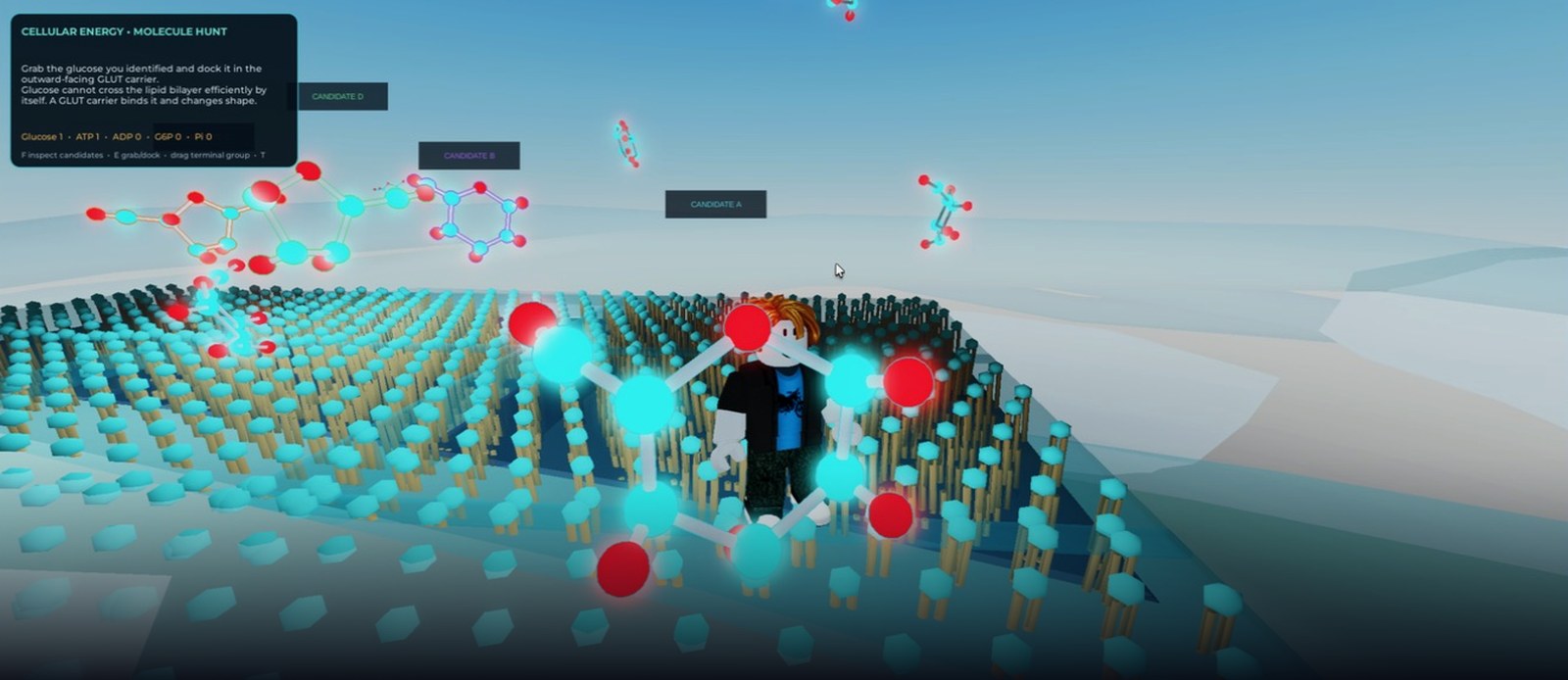
“Step inside a living cell.”
Walk into the cell, pick a molecule up with your hands and run cellular respiration a step at a time — while Lumi watches what you are doing and guides you from inside the world.
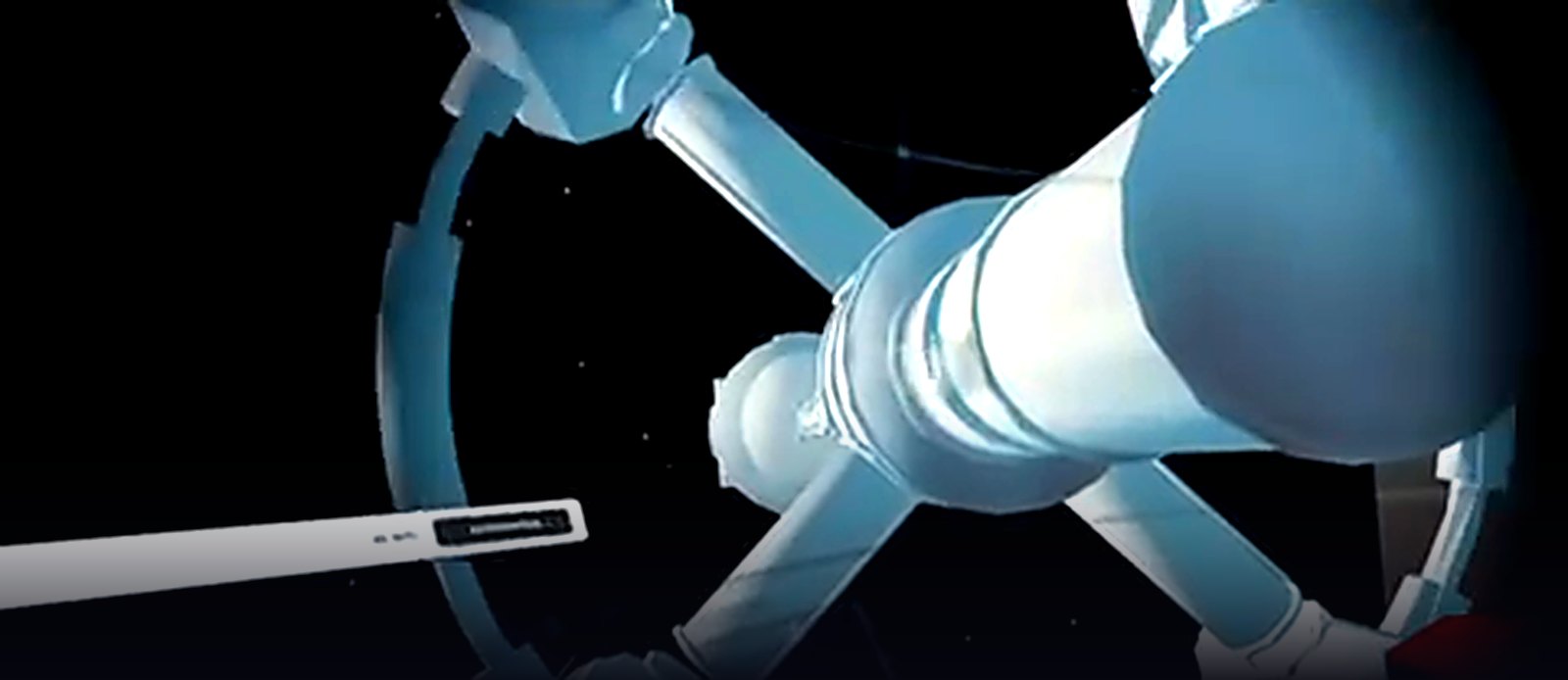
“Repair a station in orbit.”
Truss, pressurised modules and a robotic arm in open space — with the repair called out step by step in-world, on a panel that floats beside the job.
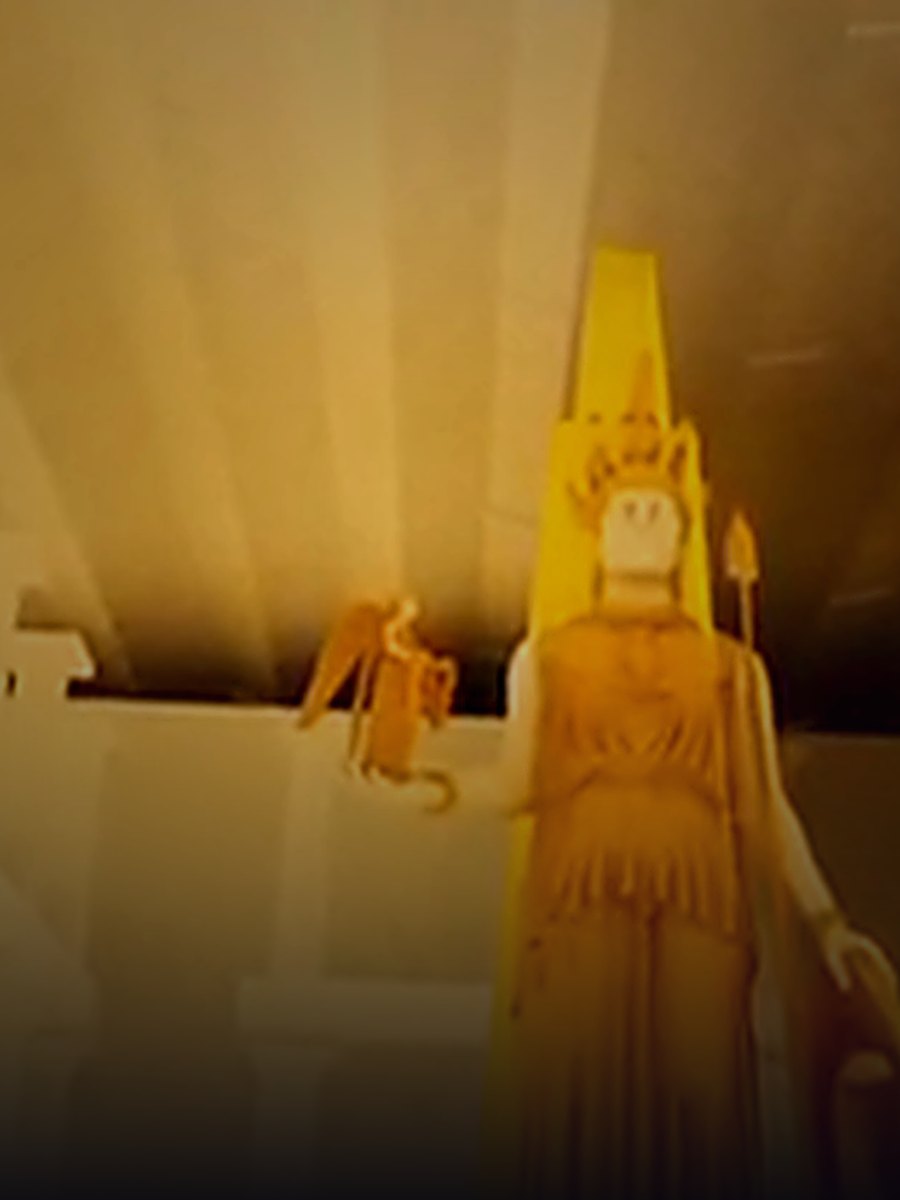
“Meet the treasures up close.”
The cella by brazier light — the Athena Parthenos in gold, Nike standing in her hand.
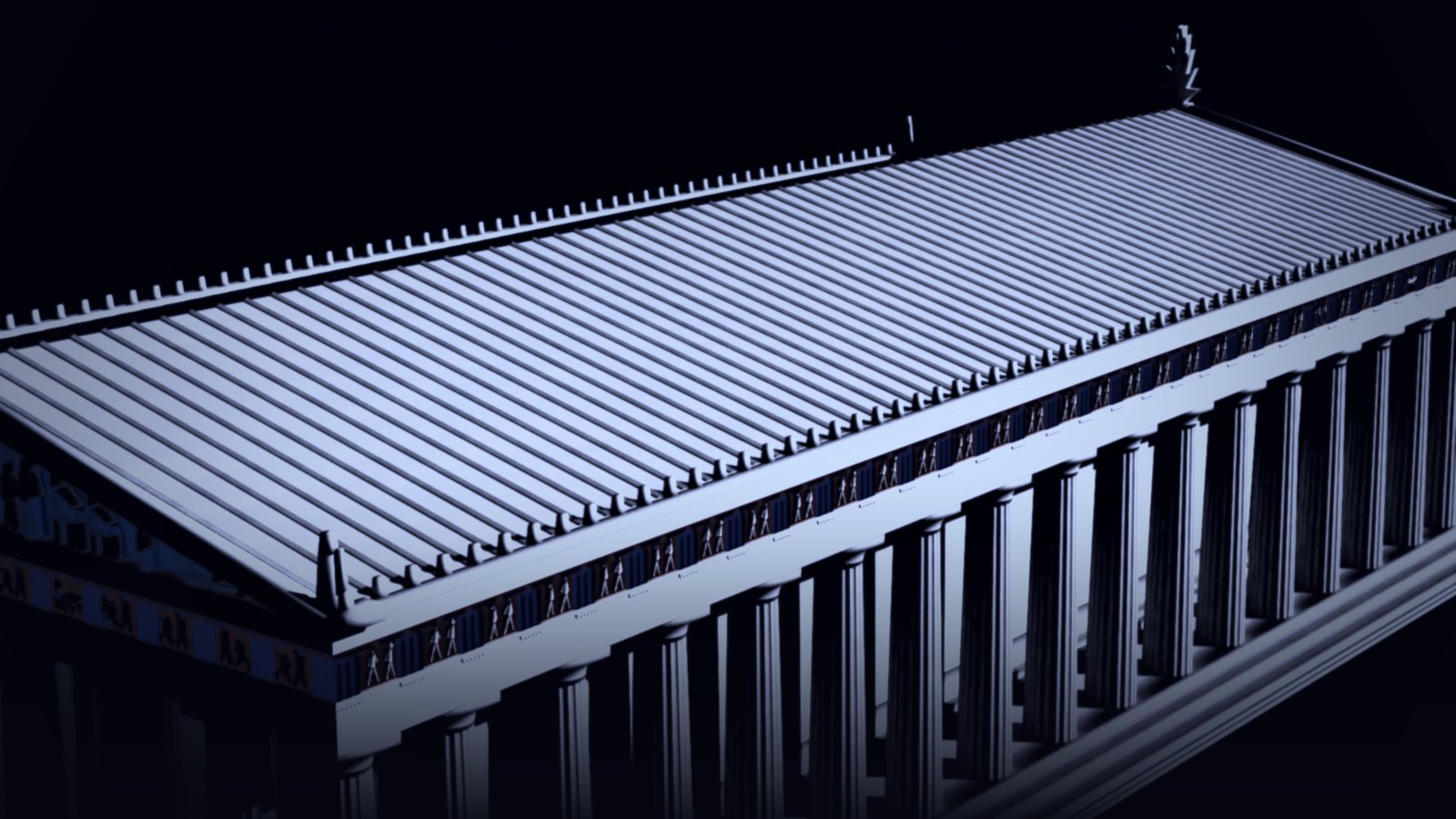
“Walk the Parthenon while it stands.”
Ground level, roof still on, and Iktinos the architect on site to be asked about it.
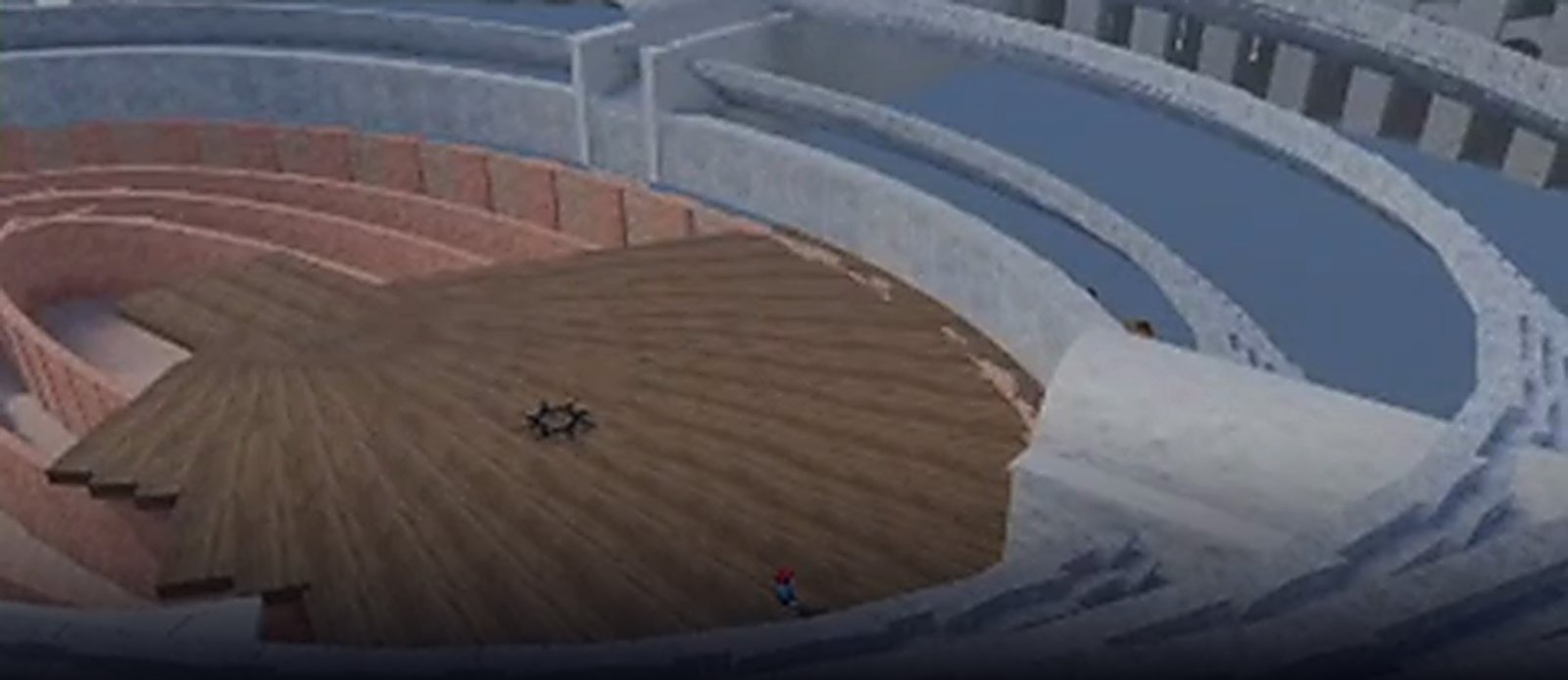
“Cross a Roman arena.”
Banked seating, the wooden floor, and the hypogeum cross running underneath it.
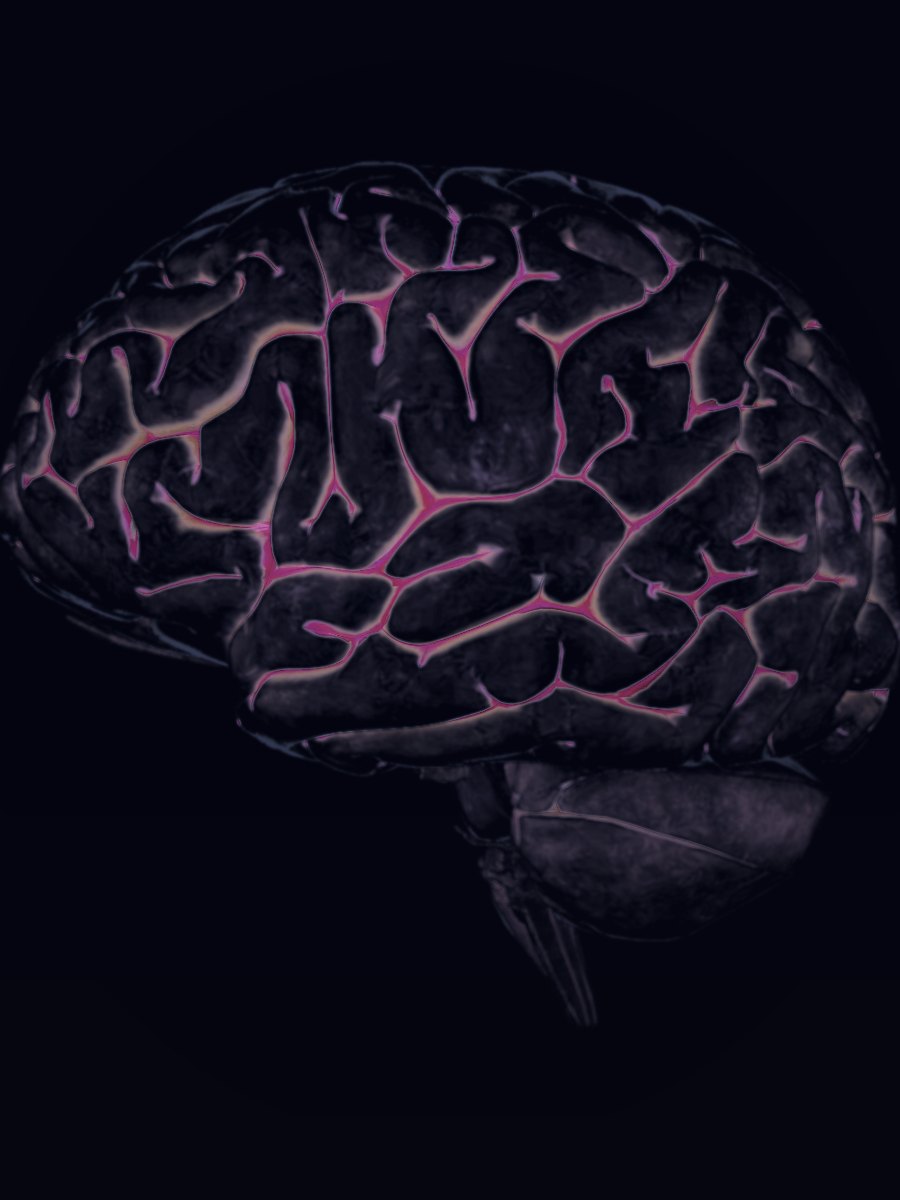
No trailer line — there is no footage to quote.
Around 200 named structures, cortex to cranial nerves. The model exists; no world has been built from it yet.
Status Five of these worlds are playable in engine today, and every hover loop on this page is a capture from live play. So is every still except two, and both say so on the plate: the Parthenon still is the project’s own model of the building rather than a frame of it being walked through — its loop is the live capture — and Human Body is not playable at all. That one is planned only; its card shows the anatomical source model, around 200 named structures, that no world has been built from yet. None of the five has shipped: the release date the company states is September 2026.
Built in the open — shipping September 2026
Ludumina Labs is a company mid-build, not a company with a back catalogue. Nothing has shipped and there is nothing to quote — but there is a date, and it is ours: LUDUMINA WORLDS is due September 2026. What follows is the work itself, and every entry carries the state it is actually in.
The Roman arena is crossed on foot — up the banked seating, across the wooden floor, over the dark cross of the hypogeum below it. It is one of four worlds now running in engine alongside Living Cell, each of them captured with a learner inside.
That figure on the steps is the whole point. This is a capture taken while somebody played, not a camera move flown over a model — which is why every entry below states plainly what state its subject is in, and why the states are ranked.
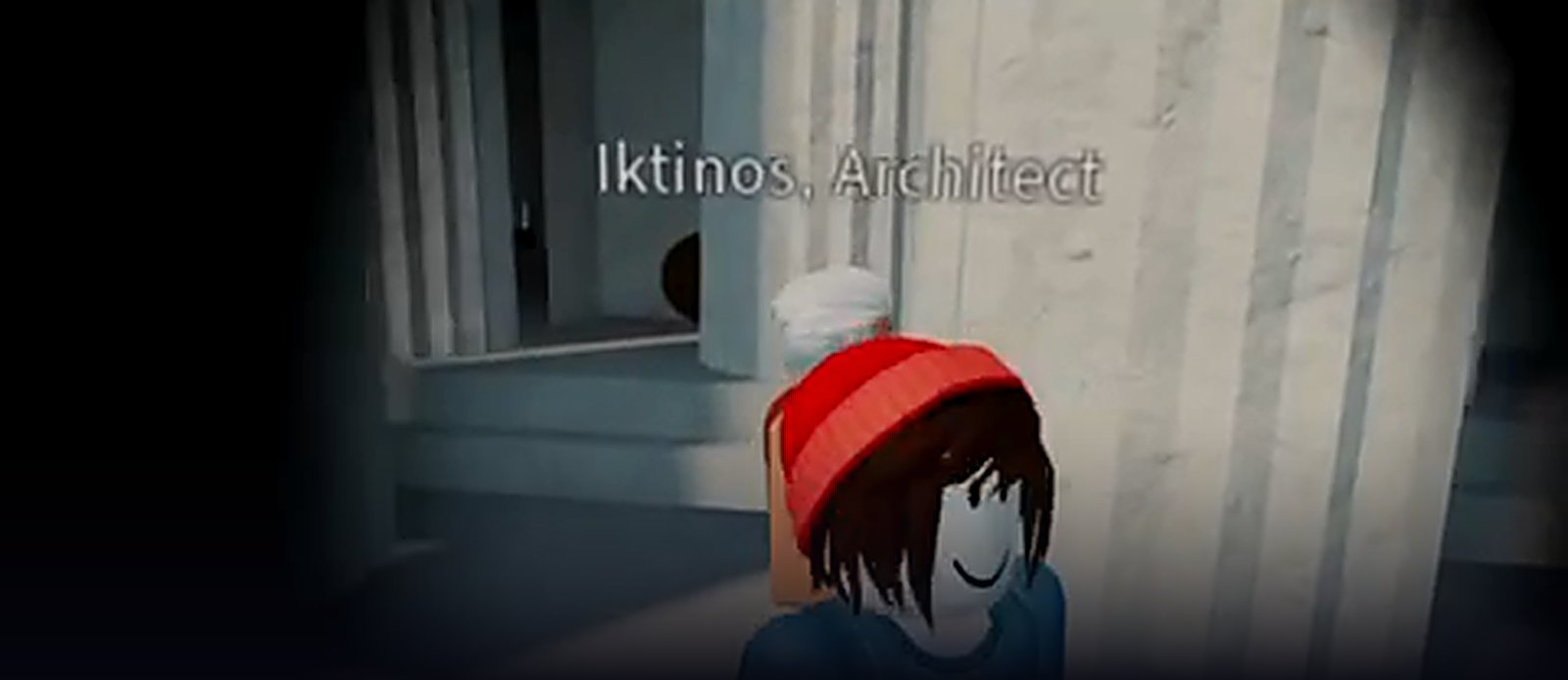
Walked at ground level, intact, from between the columns rather than from a helicopter. Under the colonnade there is a man with a name over his head: Iktinos, Architect — the one who drew it.
An earlier entry in this log called the Parthenon a source model. That was true when it was written and is not true now: the reconstruction has been taken into the engine, given collision, a way in and an inhabitant. It stopped being the thing you look at and became the thing you are standing in.
Pressurised modules, a truss spine and a robotic arm held against open space. The science world sets a repair rather than a tour: read the instruction, find the fault, fix it where it is.
The instruction sits out in the world with the learner instead of in a menu behind it — the same principle as the cell, applied where the consequences of getting it wrong are more obvious to an eleven-year-old.
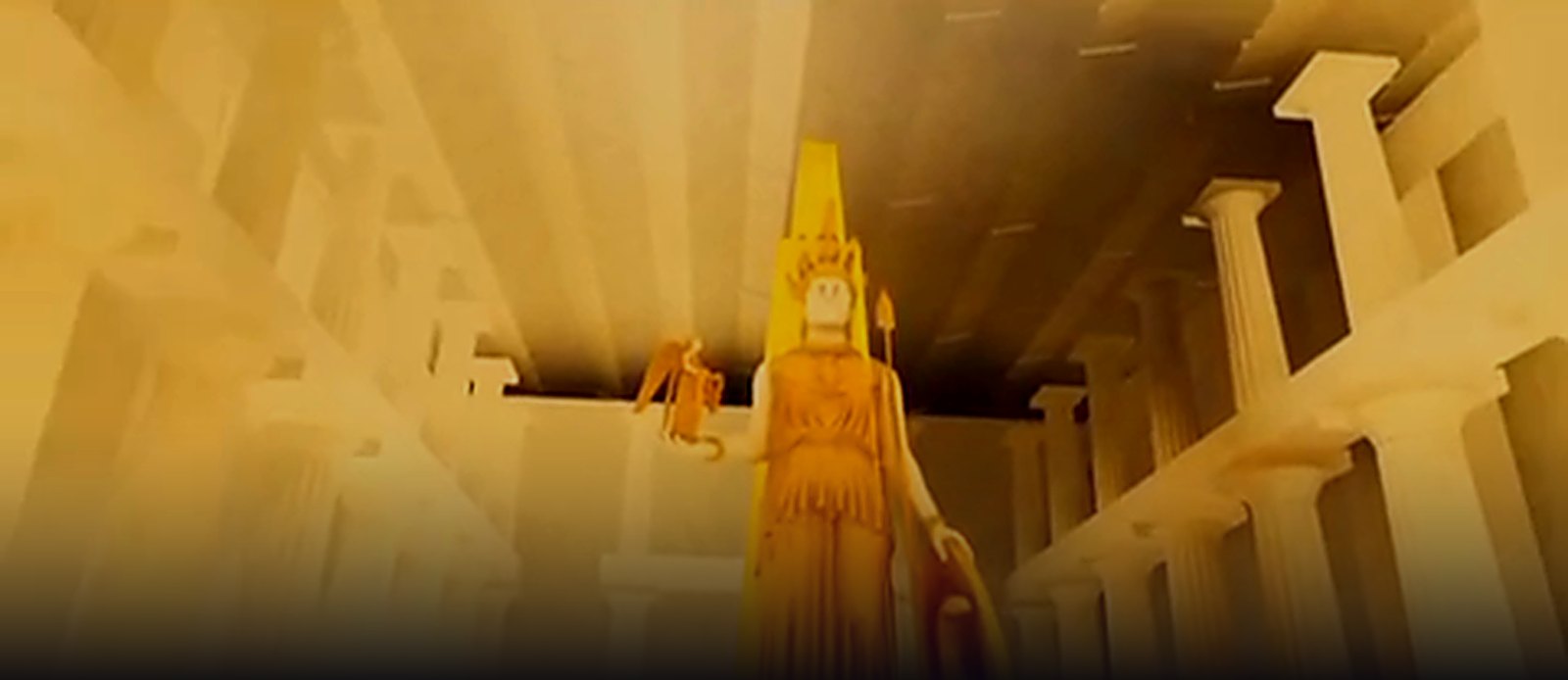
Inside the cella, by brazier-light: the statue in gold, Nike standing in her outstretched hand. The art world is about meeting the object rather than reading the label beside it.
The reason to walk into the temple is that the statue is the size of a building. A photograph of it flattens that out; standing at the foot of it does not. This is what the room looks like from where a learner is put.
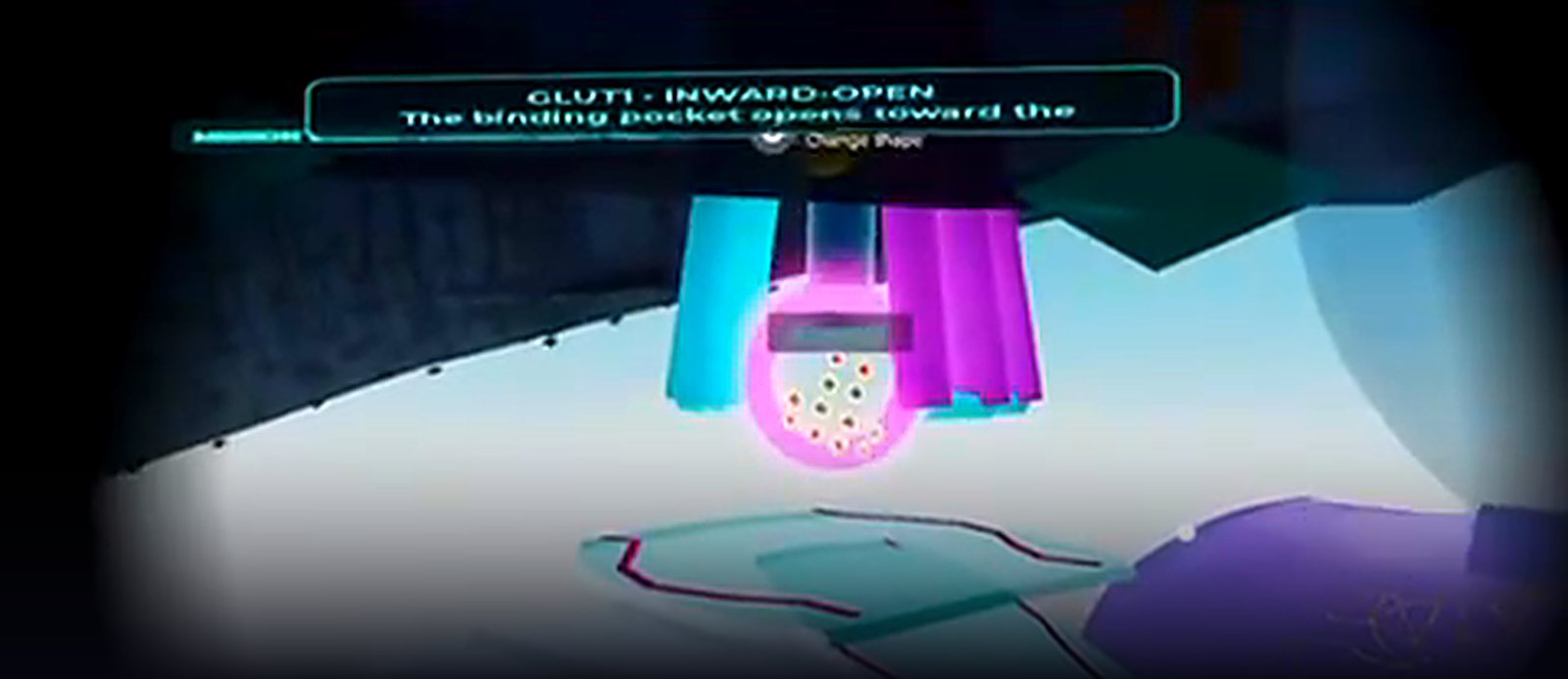
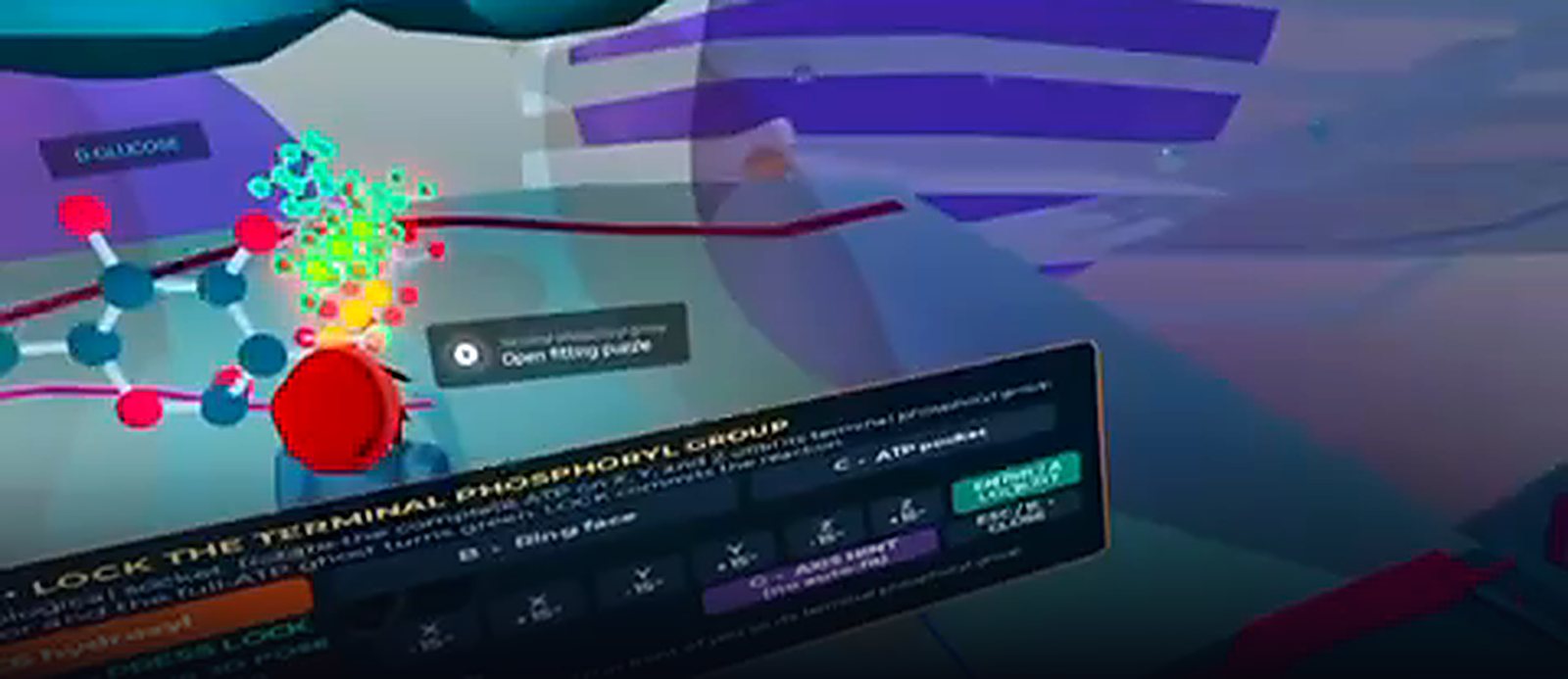
The docking mechanic in Living Cell is playable, and captured. A learner inside the cell picks up a glucose molecule and seats it in hexokinase's binding pocket, with Lumi giving instruction in-world while it happens.
None of it is a pre-rendered sequence. The learner walks, grabs and mis-seats the molecule under their own control, and the correction arrives in the world at the moment of the attempt — not on a results screen afterwards.
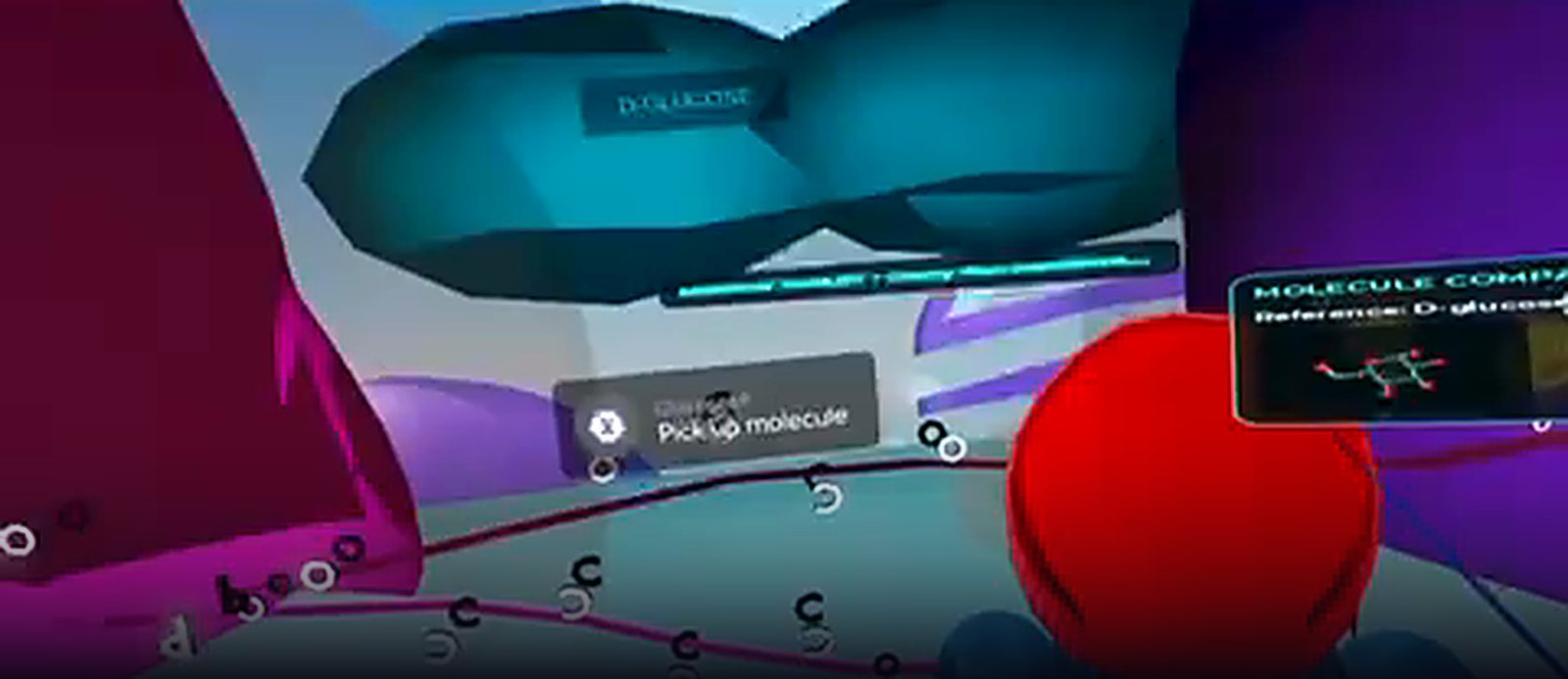
The guidance layer is fed structured learner-state snapshots taken from authoritative game state: movement, object proximity, current selection, wrong attempts, hesitation, task sequence, mission progress.
That is the difference between a tutor that can tell a child has stalled in front of the same structure, and a chatbot waiting to be typed at. Lumi answers what the learner is doing, not only what they ask.
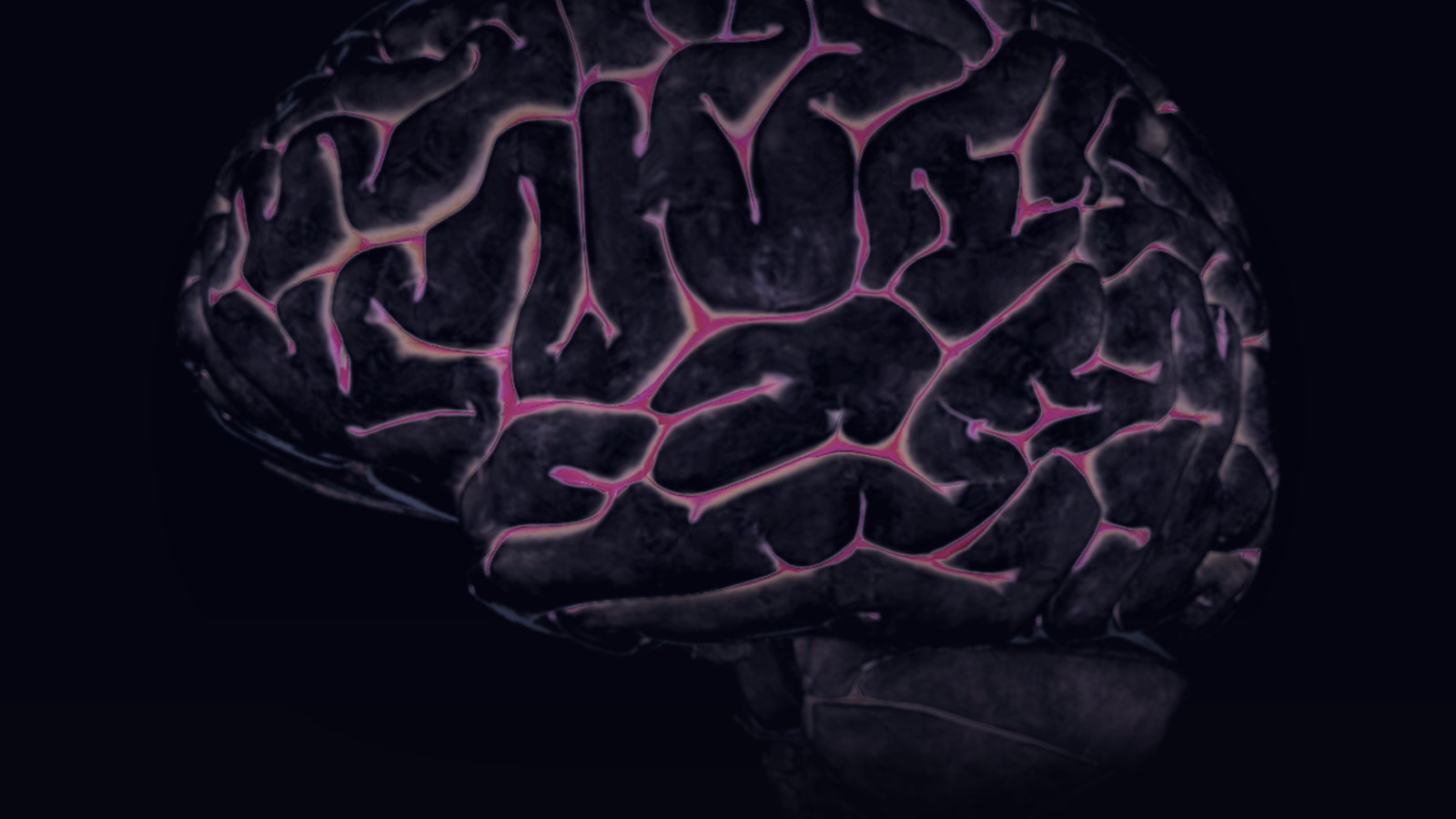
The anatomy world's source model is built and exported: cortical regions, white-matter tracts, ventricles, cranial nerves, deep nuclei, vasculature and meninges — separately named, one mesh each.
Naming and separating every structure is unglamorous work, but it is what lets a learner pull the model apart, isolate a single tract and be told what they are holding. A fused brain mesh can only ever be looked at.
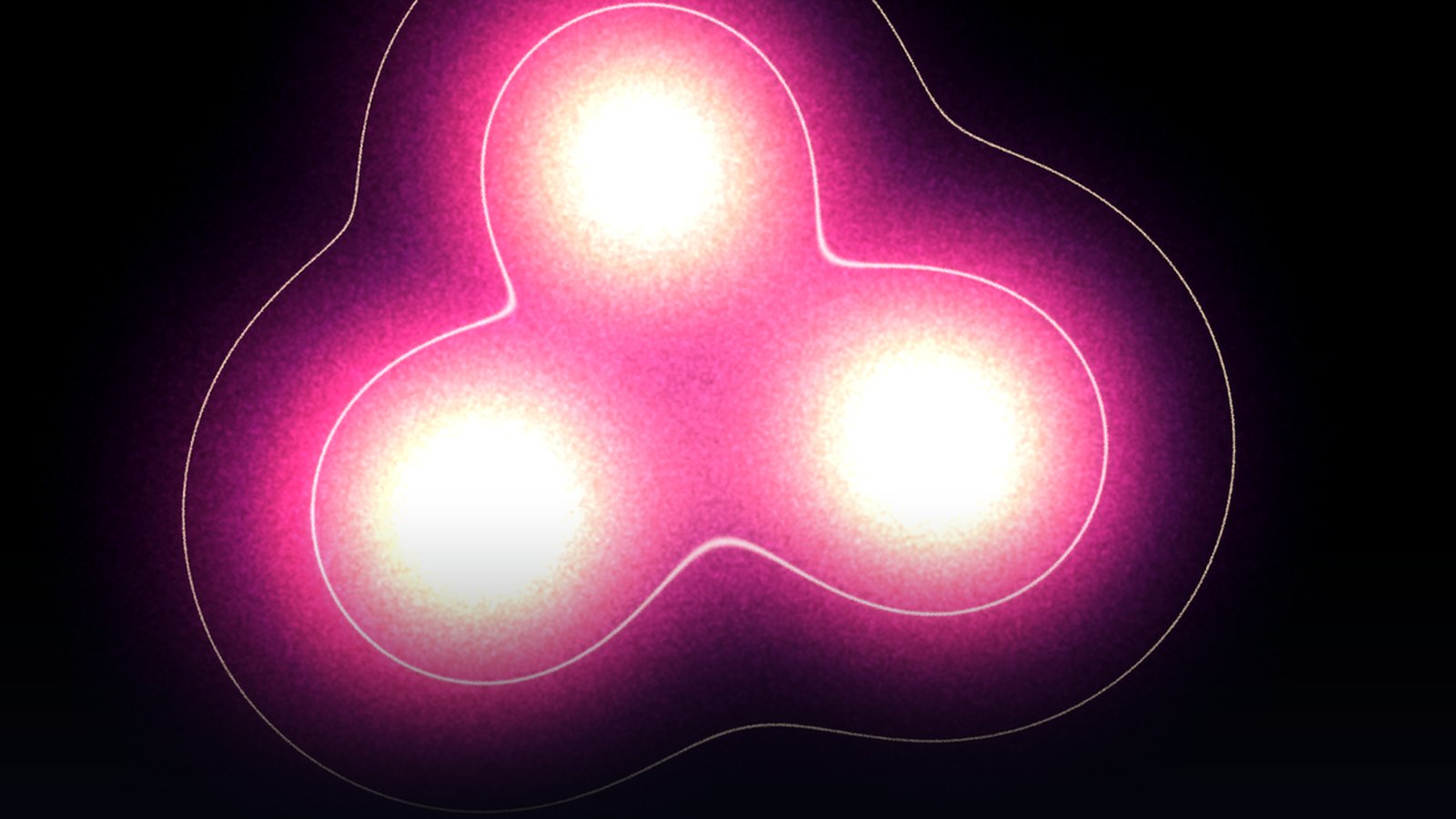
Physics Playground's source science is computed: a carbon-12 nucleus, plus electron-density and orbital solutions worked out properly rather than drawn as rings around a dot.
These are renders of the actual solutions, not diagrams redrawn to look scientific. If a child is going to fly through an atom, the shape they fly through should be the real distribution.
The hub that links the worlds exists in source — a shared progression profile carrying science coins, XP, levels, badges and mission history, with mission completion verified on the server.
So progress earned in the cell is still there in the arena, and a learner is one person moving through a curriculum rather than five separate save files.
Entries 01–09 · state ladder
Stages, and one date
Five worlds running in engine, a guidance layer being written around them, and one date we are willing to put in writing. This is the path forward rather than a history, and every stage on it is marked with the state it is actually in.
One date, and only one: September 2026. No quarters, no funding, no headcount. Nothing else below is a promise about when.
Stage 01 / 07
Built
Living Cell runs: a learner stands inside a cell, picks up a glucose molecule and docks it into hexokinase’s sugar pocket, with Lumi guiding the attempt as it happens. Four more run alongside it, and every frame on this page was captured inside one of those builds rather than mocked up for a website.
Arena — crossed on foot
Cella — Athena Parthenos
Orbit — station repair
Stage 02 / 07
In progress
The layer that turns behaviour into understanding. Raw play is compiled into structured learning-state snapshots, and Lumi is grounded in those snapshots — authoritative game state rather than guesswork — so it responds to what a child is doing, not only to what they type. This is the part currently being written, and the part that has to hold in all five worlds.
Signals feeding the snapshot
Stage 03 / 07
Next
LUDUMINA WORLDS — science, art and history — is due September 2026. It is our own date, taken from the closing frame of our own trailer, and it is the only one on this site. The rest of this rail is ordered, not scheduled: the stages run in sequence, and each one carries the state it is in rather than a quarter.
Closing card, product trailer
Ludumina Worlds
Science · Art · History
Due
September 2026
Nothing has shipped yet
Stage 04 / 07
Next
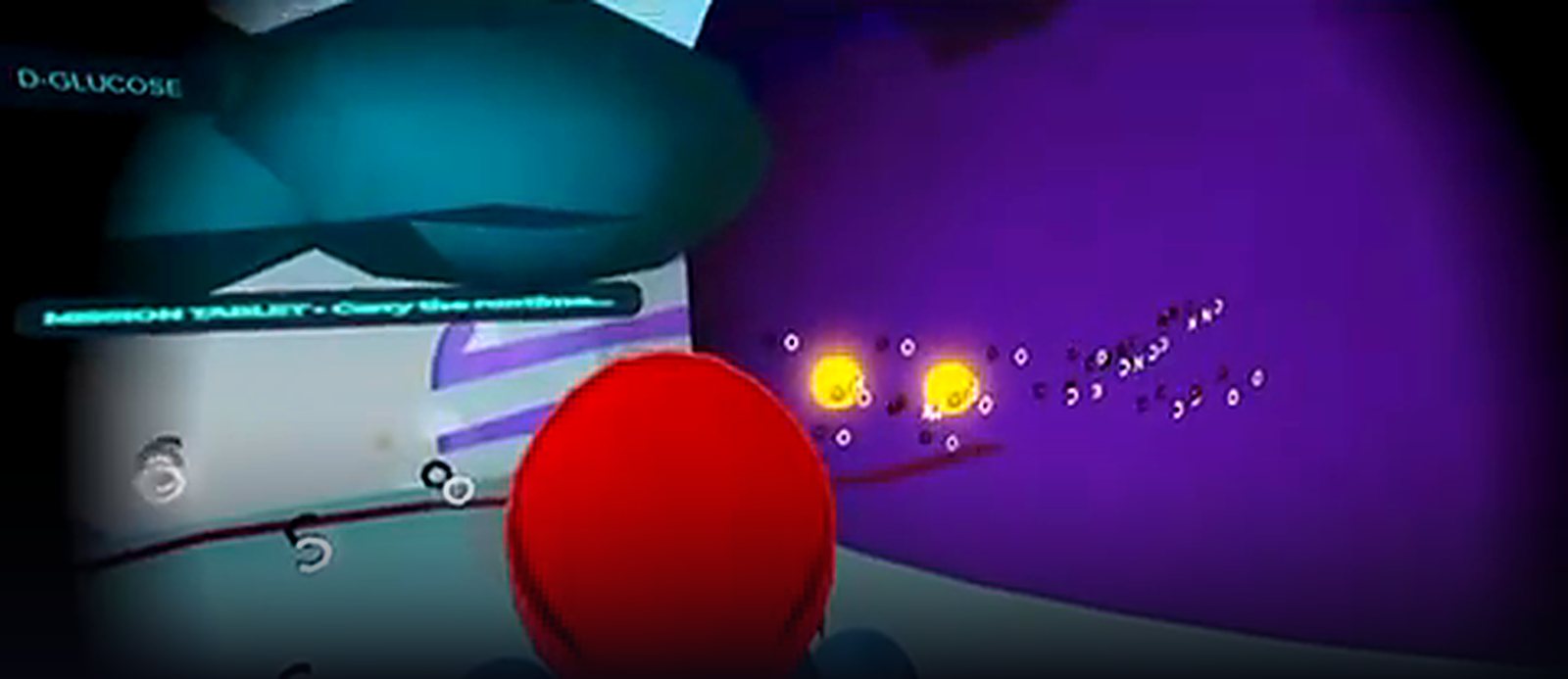
The people who decide whether any of this works are eight to fourteen years old. Beta testing with them is the real test — not whether the worlds run, which they do, but whether a child who has never been told what a hexokinase is comes out the other side knowing.
Stage 05 / 07
In progress
One progression profile shared across worlds, so what a child earns inside the cell still counts when they walk into the arena. It lives in the hub rather than in any single world, and mission completion is verified server-side rather than trusted from the client.
Shared profile record
Carried between worlds — not per-game
Stage 06 / 07
Planned
Human Body, Protein Factory and Physics Playground have not been built. What exists is the material they would be made from — roughly two hundred anatomical structures modelled and named separately, one mesh each, and real carbon electron-density and orbital solutions computed rather than drawn as rings around a dot. The material is finished; the worlds around it are not started.
Brain — source model
Carbon — electron density
Stage 07 / 07
Planned
Direct-to-parent subscription first, because it is the shortest route to real children actually using the thing. School licences, enrichment centres and STEM workshops follow from there, in that order and for that reason.
Closed beta · Ludumina Worlds
Five worlds are playable in engine today — Living Cell, The Parthenon, Orbital Station, Roman Arena and The Treasures. Ludumina Worlds ships September 2026. Send us your email and we will get in touch when family testing opens.
Ludumina Worlds · announce trailer
Chapters
Captured from the build and recorded on a phone, so it is soft. Every world shown is running in engine.